When it comes to pooping, constipation isn’t just about what you eat. In fact, constipation has many different causes, from stress and the medications you take to not getting enough movement and pelvic floor muscles that don’t relax or coordinate in the right way.
Common symptoms of constipation include hard or difficult-to-pass stools, straining, fewer than 3 bowel movements per week, and feeling like you haven’t fully emptied your bowels.
The good news is that there are plenty of ways to help constipation, and simple changes can often make a big difference. The right combination of exercise, pelvic floor muscle retraining, and other strategies can support your digestive system for healthy bowel movements to ease constipation.
5 General Exercises to Help Constipation
Exercise is well-known to be important for everything from your heart and brain health to sleep and hormone health. Not only does it keep your joints and muscles moving but keeps your gut moving as well.
Regular exercise may be helpful in relieving constipation by supporting movement in your digestive tract and promoting a healthier gut microbiome.1
1. Walking
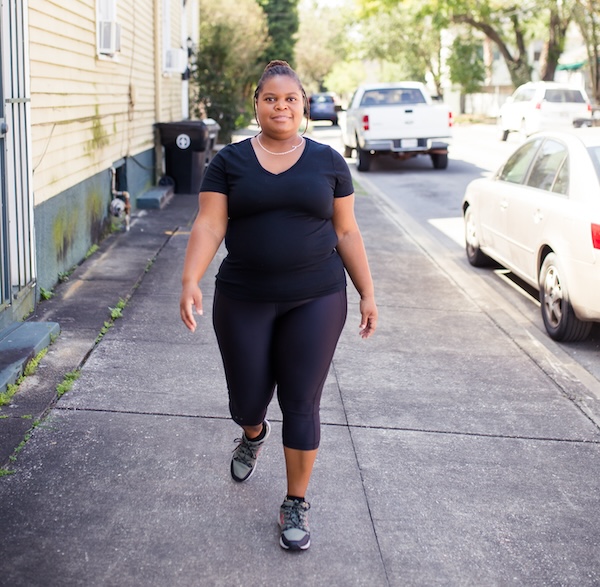
Movement can help get your gut moving, and it can be as simple as walking. One review found that people who got at least 30 minutes of physical activity per week had a lower risk of constipation than those who were less active. And the more active people were, the lower their risk.1
To help ease constipation, try walking 20 to 30 minutes, 3 to 4 times a week. But even shorter walks throughout your day can help.
2. Trunk rotations
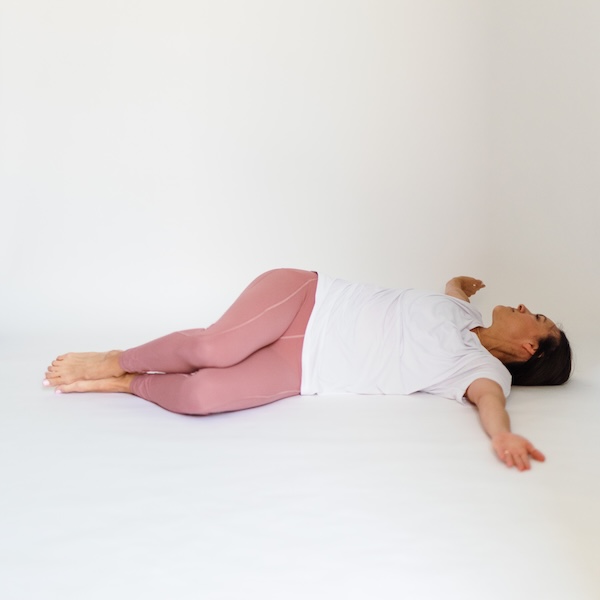
Gentle core and mobility exercises can get your abdominal and trunk muscles moving, which may support healthy digestion and bowel movements. Research on core-strengthening exercise suggests it may influence intestinal movement, although more research is needed to understand how these exercises affect constipation.2
How to do it:
- Lie on your back with your knees bent and feet flat on the floor.
- Extend your arms out to the sides.
- Slowly lower both knees to one side while keeping your shoulders flat on the floor.
- Hold for 2 to 3 seconds, then return to center.
- Try 10 to 15 trunk rotations on each side
3. Cat-cow
Another helpful exercise to focus on movement in your core is cat-cow. This gentle movement also helps you move your spine through a comfortable range of motion.
How to do it:
- Start on your hands and knees, with your hands under your shoulders and knees under your hips.
- Slowly round your back toward the ceiling and gently tuck your chin.
- Then slowly arch your back, lifting your chest and tailbone toward the ceiling.
- Move slowly between the two positions for 8 to 10 repetitions.
4. Deep squat stretch
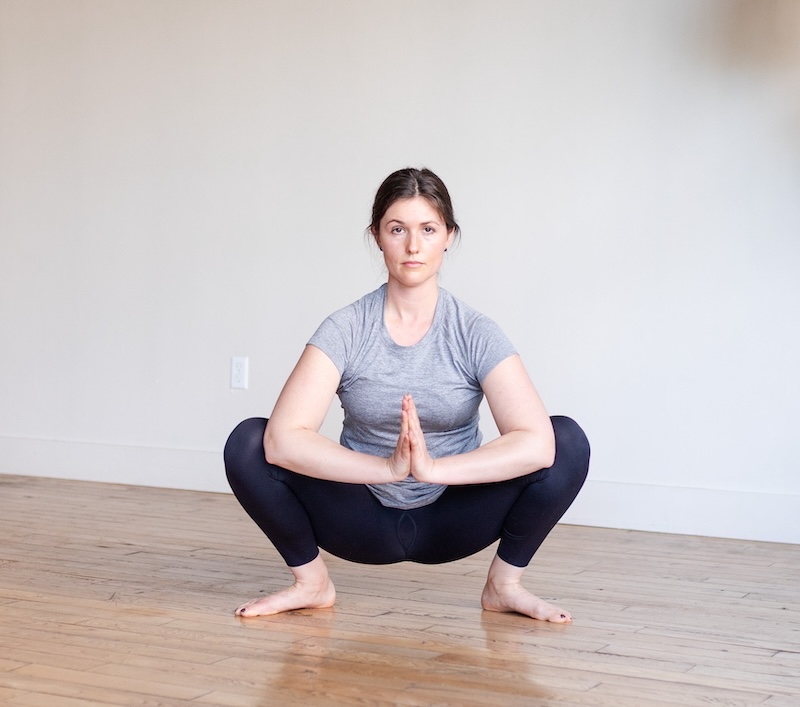
A deep squat stretch can help improve mobility in the hips, pelvis, and lower body, which may make it easier to relax the muscles involved in bowel movements.
How to do it:
- Stand with your feet slightly wider than hip-width apart and toes turned slightly outward.
- Slowly bend your knees and lower your hips as if you’re sitting in a chair.
- Place your elbows inside your thighs and press your palms together.
- Keep your heels on the floor, or place a rolled towel or yoga mat under them for support.
- Hold for 5 slow breaths, then slowly stand.
5. Abdominal I-L-U massage
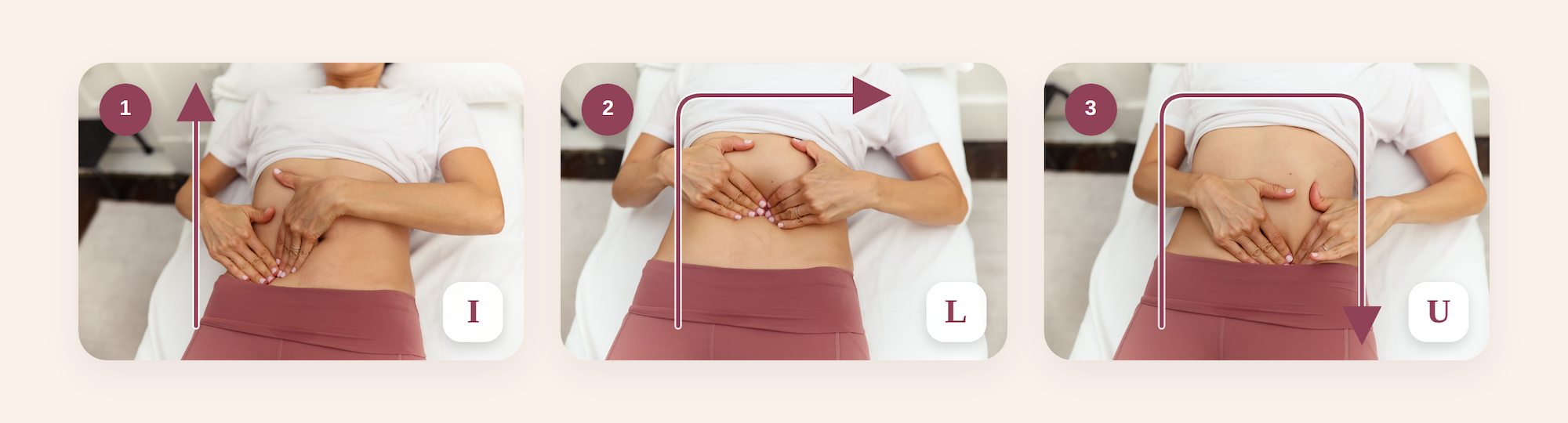
Abdominal massage may help relieve constipation, gas, and bloating by gently stimulating movement in your intestines. The “I-L-U technique” follows the path of your large intestine to help encourage stool and gas to move through your digestive tract.
How to do it:
- Lie on your back with your knees bent and feet flat on the floor. Relax your belly.
- Make an “I”: Starting on the lower right side of your belly, gently press and massage upward toward your right rib cage. Repeat 10 times.
- Make an “L”: Start on the upper right side of your belly and massage across to the left, then down toward your left hip. Repeat 10 times.
- Make a “U”: Start at your lower right belly, massage up, across the top of your belly, and down toward your left hip. Repeat 10 times.
- Use gentle, comfortable pressure throughout. Try the massage in the morning, when your bowels may be naturally more active.
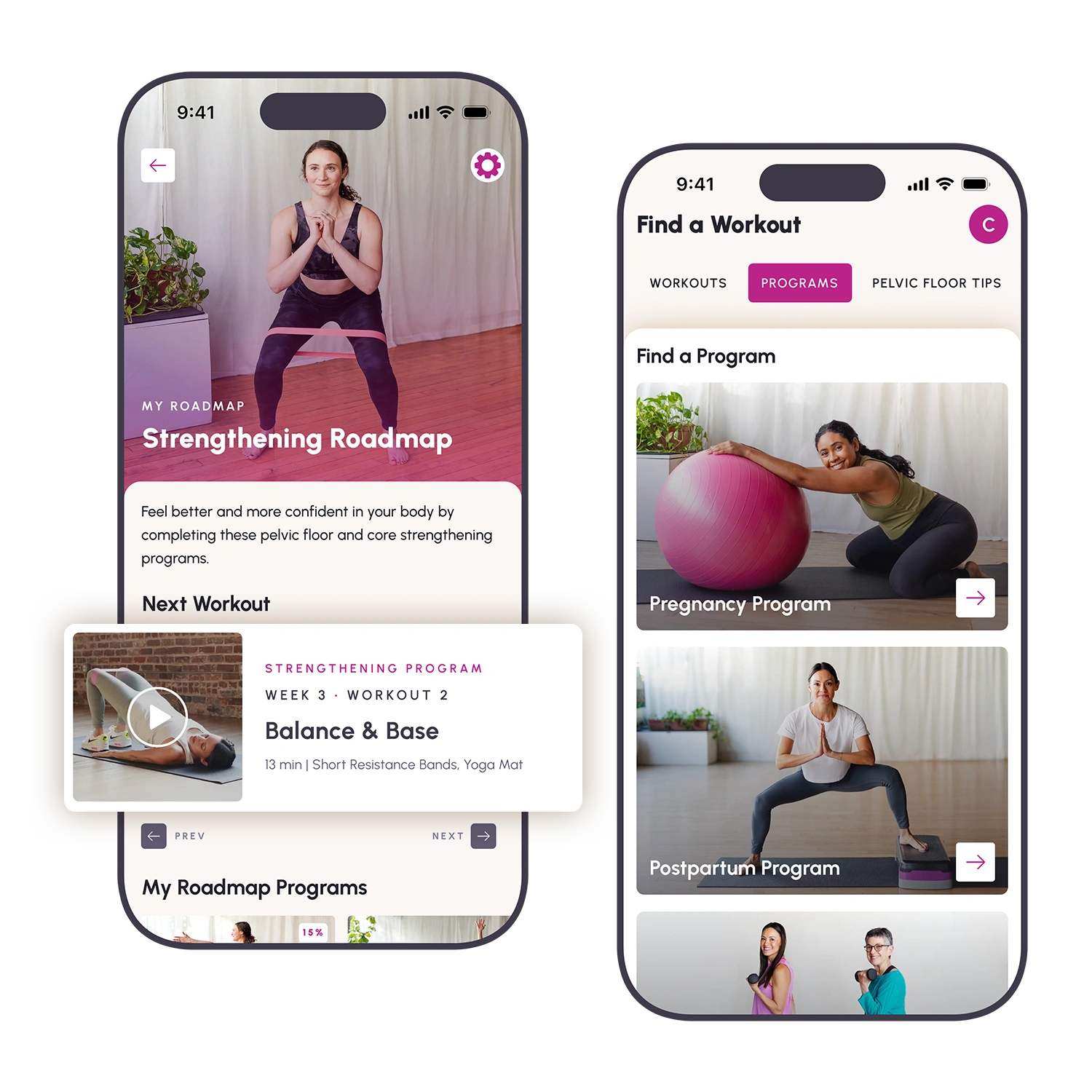
Want to add pelvic floor exercises to your routine? The V-Hive offers expert-led exercises and relaxation techniques you can do from home, so you can build pelvic floor work into your daily routine.
Explore constipation-relieving exercises
3 Pelvic Floor Exercises for Constipation Relief
Exercise can be part of constipation relief, but it isn’t the whole story. If your pelvic floor muscles stay tight or don’t coordinate properly when you poop, certain pelvic floor constipation exercises may help.
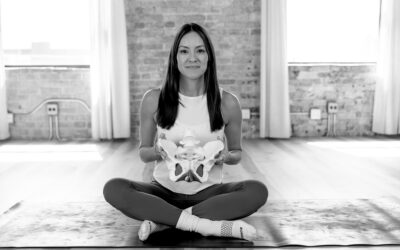
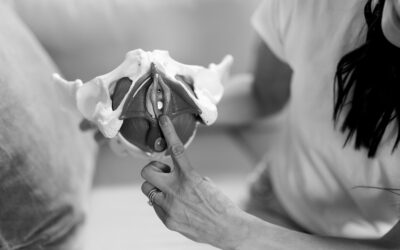
Your pelvic floor muscles play a pretty big role in helping you poop. As your abdominal muscles gently increase pressure, your pelvic floor muscles and anal sphincter should relax and lengthen to move stools.
If your pelvic floor muscles stay tight, don’t relax enough, or contract instead of releasing (this is called pelvic floor dyssynergia), it can be difficult to pass your stool — even if you have the urge to go.
Whether constipation is related to pelvic floor tightness, poor muscle coordination, or muscle changes during pregnancy and postpartum, improving how your pelvic floor muscles move may make bowel movements easier.
The following exercises, including gentle yoga poses, focus on relaxing your pelvic floor and improving your awareness of your breathing and pelvic muscles. They aren’t the same as Kegel exercises. If your pelvic floor muscles are already too tight, squeezing them over and over may not be what you need.
1. Child’s pose
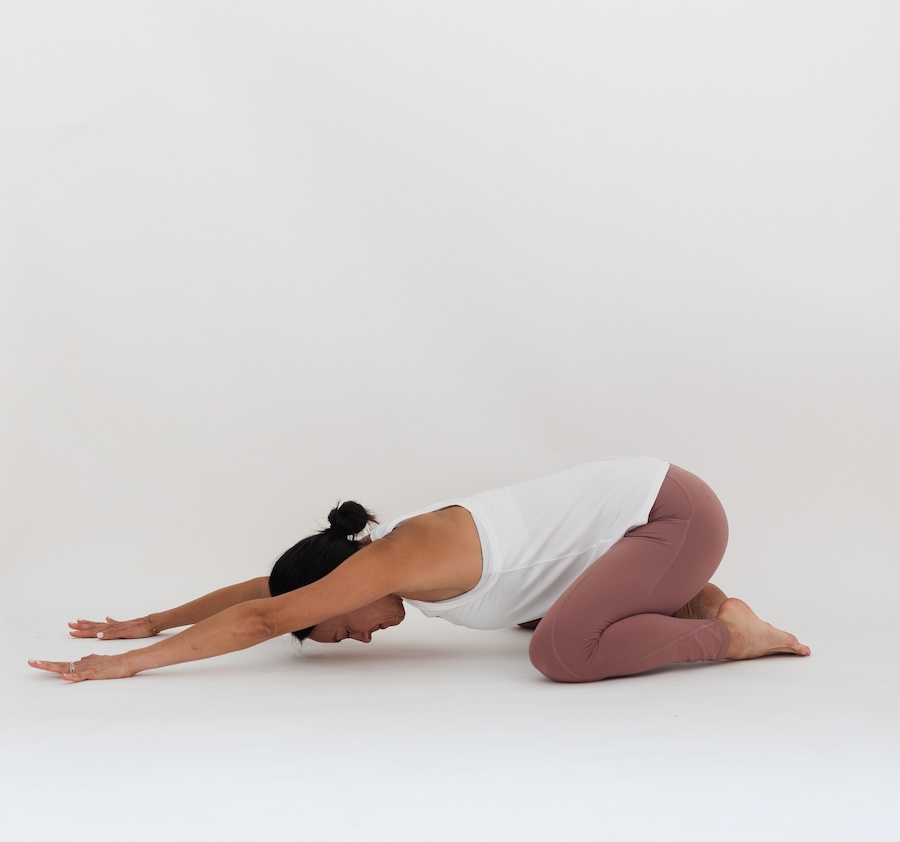
Child’s pose is one of several gentle yoga poses that can stretch your hips, pelvis, and lower back while encouraging you to relax your abdominal and pelvic floor muscles.
2. Belly breathing
Diaphragmatic breathing can help you connect with and gently relax your pelvic floor. As you inhale, your diaphragm moves down and your pelvic floor naturally lengthens; as you exhale, both return toward their resting position.
3. Reclined butterfly stretch
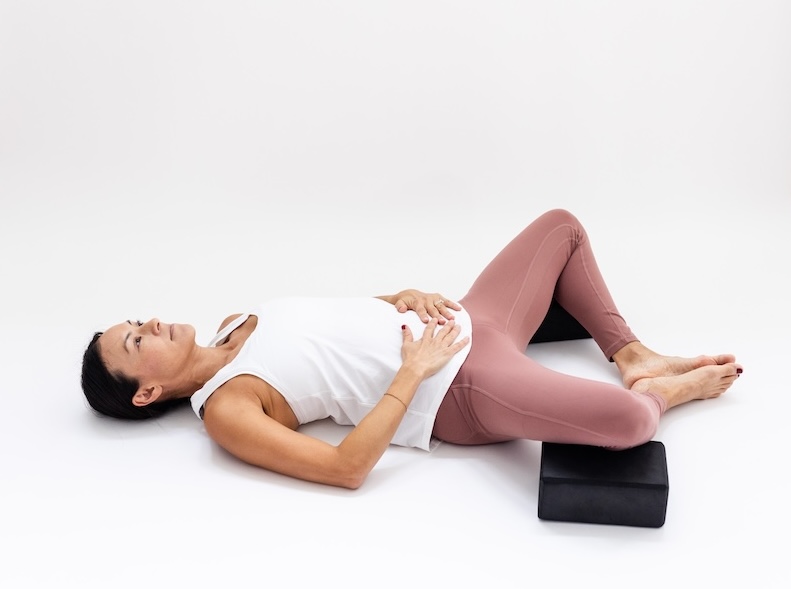
The reclined butterfly stretch gently opens your hips and pelvis and may be especially helpful for releasing pelvic floor tension.3
Want more guidance with your pelvic floor exercises? The V-Hive gives you access to expert-led pelvic floor exercises and relaxation techniques you can practice at home.
More ways to help constipation
Of course, it’s a whole lot more fun to prevent constipation than it is to treat constipation. Your plan of care for constipation may include lifestyle changes, pelvic floor therapy, and medications, depending on what’s causing your symptoms.
Hydrate, hydrate, hydrate
When your body doesn’t get enough water, your poop can become hard and dry. This makes it more difficult to pass. Drinking plenty of water can help keep your stool softer and easier to pass.
Exactly how much water you need can be different from person to person and depend on things like your activity level, diet, and health. You should be getting enough fluids throughout the day so that your pee is pale yellow (almost clear) and your poops are easier to pass.
Check your nutritional needs
Dietary fiber helps add bulk to stool and can make it easier to pass. Try getting fiber from foods such as fruits, vegetables, beans, seeds, and whole grains. Most adults should aim for about 25 g to 30 g of fiber a day, although your individual needs may vary.
If you’re not getting enough fiber from food, fiber supplementation may be another option. Just make sure that you increase fiber gradually and drink plenty of fluids to help prevent gas and bloating.
Over-the-counter treatment options
When lifestyle changes like exercise and diet aren’t enough, over-the-counter (OTC) treatments can also help treat constipation.
Stool softeners, like Colace, soften your stool and make it easier to pass. Osmotic laxatives, like magnesium citrate or MiraLAX, pull water into your stool to soften it. And stimulant laxatives, like Dulcolax, stimulate your intestines to help trigger a bowel movement.
Because these medications work in different ways and may interact with other medications, talk with your healthcare provider or pharmacist about which option is right for you and how often to use it.
When to talk to your healthcare provider
Occasional constipation is usually not a cause for concern, but talk with your healthcare provider if constipation is new, lasts for several weeks, or doesn’t get better with lifestyle changes (like the ones mentioned above).
Severe or ongoing abdominal pain, vomiting, blood in your stool, a bloated or swollen belly, unexplained weight loss, or the inability to pass stool or gas can all be signs that you need medical care.4
Find the right exercises for your constipation
Constipation can be frustrating, but you have options. Regular movement, pelvic floor relaxation exercises, hydration, adequate fiber, and healthy bathroom habits can all support healthy bowel function and your overall health over the long term.
If you’ve been struggling with constipation for several weeks or suspect pelvic floor dysfunction is causing your symptoms, a pelvic floor physical therapist can help identify what’s going on and create a plan that fits your needs.
Want to work on your pelvic floor from home? The V-Hive offers expert-led exercises and resources to help you build a routine that works for you.
Resources
- Cui, J., et al. (2024). Physical activity and constipation: A systematic review of cohort studies. Journal of global health.
- Song, B. K., et al. (2021). Effects of core strengthening exercise on colon transit time in young adult women. Journal of Exercise Science & Fitness.
- Toson, O. C., et al. (2022). Are clinically recommended pelvic floor muscle relaxation positions really efficient for muscle relaxation? International Urogynecology Journal.
- Gotfreid, J., et al. (2026). Constipation. Merck Manuals.