When making the decision to have a hysterectomy, you may hope that your symptoms will just subside afterwards, including pelvic floor symptoms like pelvic pain, sexual dysfunction, and urinary leakage.
And while it’s true that removing your uterus can be helpful for many frustrating symptoms, you may also notice that your pelvic floor symptoms change, stay the same, or that new side effects pop up during your recovery process.
Luckily, exercise after hysterectomy, especially targeted pelvic floor exercises, can reduce your risk and the severity of post-op problems and support long-term pelvic health.
Do the pelvic organs shift after a hysterectomy?
After a hysterectomy, there may be changes in pelvic organ support, but research on whether the pelvic floor changes posthysterectomy is limited. It’s unclear how much (if any) your pelvic organs actually move.
Some research suggests that a hysterectomy can be a risk factor for pelvic organ prolapse (POP) and urinary incontinence (UI).1 But most people without a prior prolapse don’t go on to need treatment including surgery for POP symptoms.2 Overall, research on how the pelvic floor is impacted posthysterectomy is mixed.3,4
Some people also experience pelvic pain after a hysterectomy or painful sex, especially if the ovaries are removed. Removing your ovaries leads to surgical menopause and decreased estrogen levels. These changes affect vulvar and vaginal blood flow, lubrication, and tissue elasticity. And these changes can contribute to symptoms like vaginal dryness, decreased pelvic floor strength, urinary leakage, or decreased sexual desire. But there’s hope, as some research shows that sexual function may not change after a hysterectomy, or it can even improve.5
While the surgery itself can impact the connective tissue, nerves, and muscles in the pelvic area, many other factors influence your pelvic floor health, like pregnancy and childbirth history, natural aging, menopause, and your overall health.6
The good news is that pelvic floor exercises after surgery can be helpful regardless of what’s causing your symptoms. They support healing, optimize your core and pelvic floor coordination, reduce the risk of complications, and improve long-term quality of life.
When to start pelvic floor exercises after a hysterectomy
The best time to begin exercise after hysterectomy depends on factors like your age, health history, the details of your surgery, and other things.
For most people, gentle movement and pelvic floor awareness can begin early in the post hysterectomy period, even within the first few days — as long as it’s comfortable and pain-free.7 Early posthysterectomy exercises should focus on breathing, relaxation, and reconnecting with the pelvic floor.
More structured posthysterectomy strengthening routines should wait to begin until around 6 weeks after any type of surgery and only once you’ve been cleared by your healthcare provider.
Pelvic floor exercises should always feel supportive and healing, not painful or straining.
Healing after a hysterectomy can feel confusing, especially when you’re unsure what exercises are safe and which ones could slow your recovery time.
Find step-by-step exercises in the V-Hive App
5 exercises to help heal your pelvic floor after a hysterectomy
During the recovery process, your pelvic floor muscles benefit from gentle support as tissues heal and your body adapts. These posthysterectomy exercises are designed to support healing, reduce pelvic pain, and gradually strengthen your pelvic floor muscles over time.
#1 Start with low-impact exercises
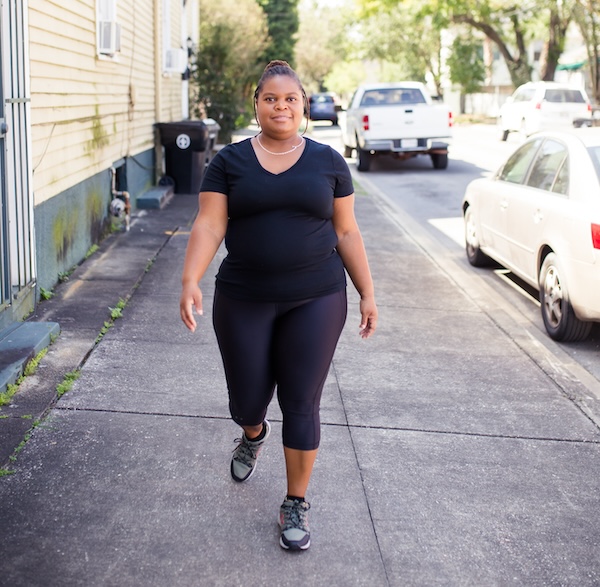
Early after hysterectomy, avoid exercises that increase pressure on your pelvic floor and abdominal wall. Instead:
- Choose gentle movement like walking or slow marching
- Keep your posture tall to support pelvic organs
- Start with short durations and gradually increase
- Stop if you feel pelvic pain, pressure, or fatigue
Low-impact movement supports circulation, energy, and healing while reducing strain on your healing body.
#2 Diaphragmatic breathing
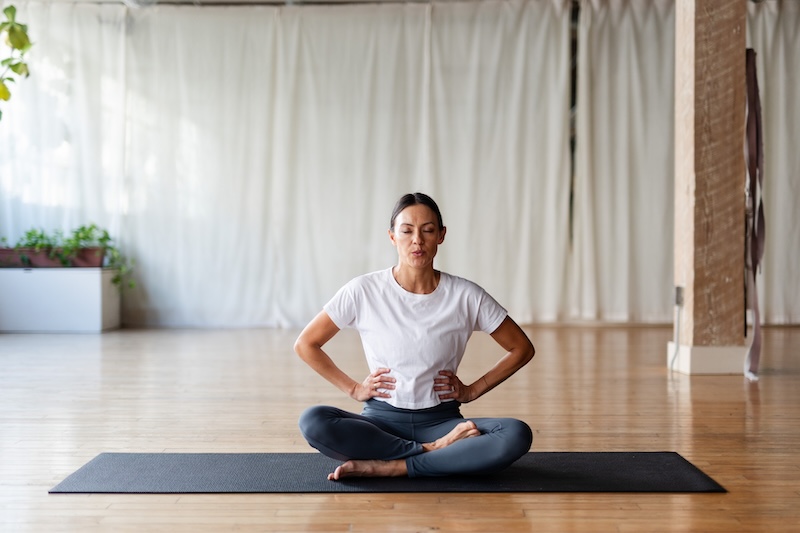
This exercise may not seem like much, but diaphragmatic breathing supports your pelvic floor coordination and nervous system regulation:
- Lie on your back with knees bent
- Place one hand on each side of your rib cage
- Inhale deeply, expanding your ribs open like an umbrella
- Exhale slowly, allowing the ribs to soften
- Let each breath flow smoothly into the next
- Repeat for 10–20 breaths
This is especially helpful early in the posthysterectomy recovery process.
#3 Cat–cow
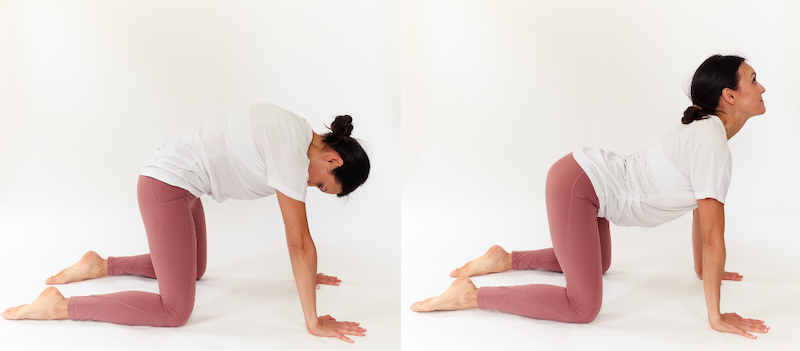
Cat-cow is a gentle mobility exercise that supports spinal health and pelvic floor coordination:
- Start on hands and knees
- Inhale, lift your gaze, drop your belly, and tilt the pelvis
- Exhale, round your spine and tuck your tailbone
- Move slowly with your breath
- Repeat for 10–20 breaths
This movement can ease stiffness and support pelvic floor recovery after a total hysterectomy or surgery for uterine fibroids.
#4 Pelvic tilt
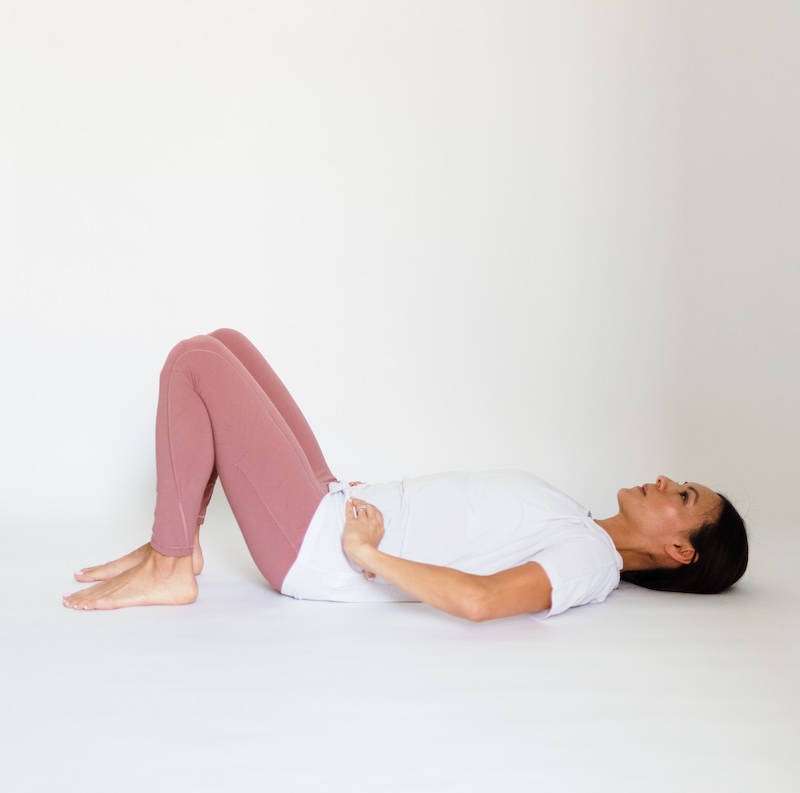
Pelvic tilts help reconnect your pelvic floor with your deep core muscles and support bladder control:
- Lie on your back with knees bent
- Gently engage the pelvic floor
- Draw in your lower abdominals
- Tilt your pelvis to flatten your lower back
- Hold for 5 seconds, then fully relax
- Repeat up to 10 reps
#5 Kegels
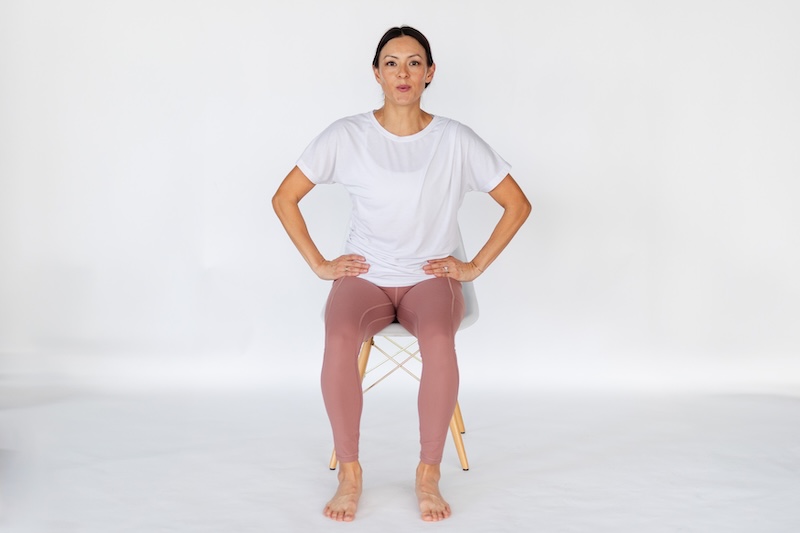
Kegels after any type of hysterectomy can be helpful when done correctly and at the right stage of recovery:
- Sit comfortably with pelvic floor muscles relaxed
- Inhale fully
- On the exhale, lift the pelvic floor as if sipping a thick smoothie
- Avoid tightening your abdomen, thighs, or glutes
- Hold for 3 seconds, then fully relax
- Repeat up to 10 reps
Progressing your pelvic floor exercises
Like any muscle, it’s important to keep exercising and challenging your pelvic floor as you heal. Gradually progress your posthysterectomy exercises by:
- Standing upright during exercises
- Increasing repetitions
- Lengthening contraction holds
- Incorporating pelvic floor engagement into daily activities like lifting or squatting
Progress should feel steady and supportive. The goal is long-term function and quality of life, not rushing recovery.
Get more strengthening exercises
Kegels aren’t the only way to strengthen your pelvic floor. A balanced post hysterectomy workout includes coordination, endurance, relaxation, and functional strength. The V-Hive membership offers postsurgical and strengthening programs designed to support healing and long-term pelvic floor health.
You don’t have to navigate your posthysterectomy recovery alone. The right pelvic floor exercises, performed at the right time, can make all the difference in your comfort, confidence, and quality of life.
Start post hysterectomy workouts today
References
- Forsgren, C., et al. (2022). Effects of hysterectomy on pelvic floor function and sexual function-A prospective cohort study. Acta Obstet Gynecol Scand.
- Kuittinen, T., et al. (2023). Pelvic organ prolapse after hysterectomy: A 10-year national follow-up study. Acta Obstetricia et Gynecologica Scandinavica.
- Yang, X., et al. (2026). Quantitative assessment of pelvic floor alterations following hysterectomy and bilateral adnexectomy using shear wave elastography and ultrasonography: A retrospective case-control study. Quantitative Imaging In Medicine and Surgery.
- Chen, W., et al. (2025). Investigating the impact of benign indication hysterectomy on pelvic floor symptoms and sexual function: A prospective study integrating pelvic floor ultrasonography and surface electromyography test. Women’s Health Reports.
- Dedden, S. J., et al. (2023). Hysterectomy and sexual function: A systematic review and meta-analysis. The Journal of Sexual Medicine.
- Tulokas, S., et al. (2022). Stress urinary incontinence after hysterectomy: A 10-year national follow-up study. Archives of Gynecology and Obstetrics.
- Grundy, K. (2024). Exercise after a hysterectomy: Examples, tips, and activities to avoid. GoodRx.