Can I Ride a Bike While Pregnant? Safety Tips & Advice

Last Updated:

can i ride a bike while pregnant

If you’re pregnant and wondering, “Can I ride a bike while pregnant?” — the answer for most women is yes. Cycling is a safe, low-impact exercise that can help you stay active, support your body, and prepare for childbirth. Riding a bike can improve your mood, strengthen key muscles, and maintain endurance, all while being gentle on your joints.

But pregnancy changes your center of gravity, loosens your joints, and can affect your balance, comfort, and breathing. These shifts mean that bike fit, saddle comfort, and awareness of saddle pain become especially important.

How to fit your bike for safety and comfort in pregnancy

Let’s get straight into how to be safe and comfortable. A proper bike fit is one of the best ways to prevent women’s bicycle seat pain, saddle discomfort, and strain on your soft tissues while riding. Even small adjustments can make a big difference in preventing saddle pain and saddle discomfort during pregnancy.

  1. Adjust your saddle height
    Your saddle height should allow a slight bend in your knee at the bottom of each pedal stroke. This positioning improves efficiency, reduces strain, and keeps your sit bones supported.
  2. Move your seat forward
    As your belly grows and your center of gravity shifts, sliding your seat slightly forward helps you stay upright and prevents your knees from bumping your abdomen.
  3. Raise your handlebars
    Keeping your handlebars level with, or slightly above, your saddle height encourages a more upright position. This reduces pressure on your pelvis, lower back, and sit bones. Sitting more upright can also help make it easier for your rib cage to move to support your breathing mechanics as you ride.1
  4. Choose the right saddle
    The bike saddle is a major factor in saddle pain and saddle sores.2 Pregnant women often notice more pressure on the perineum, so comfort matters. Look for a seat with a wide saddle to better support your sit bones.1 (Find more tips on reducing women’s bicycle seat pain below!)
  5. Adjust through trial and error
    Every body is different, especially during pregnancy. Use trial and error to find your most comfortable setup. Make small changes, ride for a few days, and notice how your hips, knees, and back feel. Focus on comfort and stability, not perfection.3

How to prevent and relieve saddle pain during pregnancy

Saddle pain and saddle sores are common complaints for cyclists. Pregnant women are especially prone because of hormonal changes and increased pelvic sensitivity. But with a few key strategies, you can ride comfortably throughout pregnancy:1

  • Take breaks often. Stand on the pedals or shift positions every 20 minutes to relieve pressure and improve circulation.
  • Wear padded cycling shorts. These protect soft tissues and minimize friction that leads to saddle sores. Here’s a great option to try during pregnancy.
  • Adjust your saddle tilt. A slight downward angle can relieve pressure on the front of your pelvis.
  • Use a gel or padded cover. These add extra cushion for improved saddle comfort and distribute pressure more evenly.
  • Check posture. Keep your spine neutral, shoulders relaxed, and core gently engaged.
  • Rest when needed. If discomfort or saddle pain persists, take a few days off and let tissues recover.

If pain continues despite adjustments, consider using a stationary bike. It reduces balance demands and your risk of falls, while still providing the benefits of cycling.

Supportive gear and compression for pregnant cyclists

pelvic floor support for pregnancy with existing prolapse

Compression and pelvic support can make a big difference when cycling while pregnant, especially if you have pelvic pressure, prolapse, or vulvar varicosities:

  • Use compressive pelvic supports. These garments help stabilize the pelvis and reduce discomfort.
  • Avoid waist trainers. If you have diastasis recti, tight abdominal binders can worsen separation.
  • Opt for gentle compression leggings or belly bands. Love Steady has compression leggings and other gently supportive options, which provide comfortable, functional support without over-compressing.
  • Monitor your abdominal wall. Watch for “coning” (a bulging along the midline) and adjust your posture or effort level if you see it.

Is biking a good exercise for pregnancy?

Yes — cycling is an excellent moderate-intensity exercise during pregnancy when your healthcare provider says it’s safe.4 It’s a low-impact workout that strengthens muscles, improves cardiovascular health, and supports overall wellness.

The American College of Obstetricians and Gynecologists (ACOG) recommends about 150 minutes of moderate-intensity activity each week for those with uncomplicated pregnancies.5 A stationary bike is one of the safest and most effective ways to meet this goal.

Benefits of riding a bike during pregnancy include:

  • Supporting comfortable weight gain and healthy circulation
  • Strengthening key muscle groups for labor and recovery
  • Reducing the risk of pregnancy-related complications such as gestational diabetes6, preeclampsia7, and high blood pressure8
  • Calming low back pain9, swelling, and fatigue
  • Boosting energy, posture, and mood

As your pregnancy progresses, stay hydrated and adjust your position or intensity as needed to maintain comfort and safety.

Reducing the risk of falls while cycling pregnant

Falls are the main safety concern when biking during pregnancy. As your center of gravity shifts, your balance and reaction time may change. To reduce the risk of falls, choose flat, even terrain or transition to a stationary bike as your belly grows. Always keep both hands on the handlebars, ride at a controlled pace, and stop immediately if you feel dizzy, lightheaded, or off balance.

Breathing and core engagement: Protect your pelvic floor

pregnant woman sitting on a chair breathing

Your breathing and core control change during pregnancy, which can affect your pelvic floor. Proper breathing prevents excessive abdominal pressure and protects soft tissues.

  • Exhale with exertion. Breathe out when you push down on the pedals to protect your abdominals and pelvic floor.
  • Avoid breath-holding. This increases downward pressure and strain.
  • Engage gently. Keep your belly slightly drawn in — avoid “bracing” or bulging.

If you notice pelvic pain, heaviness, or shortness of breath, reduce intensity and reassess your form.

When to stop exercise or scale back

Most pregnant women can safely ride a bike or exercise during pregnancy, as long as their healthcare provider says it’s safe. According to ACOG, some conditions may make exercise unsafe, including:5

  • Certain heart or lung diseases
  • Placenta previa after 26 weeks
  • Preeclampsia or high blood pressure
  • Severe anemia
  • Risk of preterm labor or ruptured membranes

If you’re cleared to ride a bicycle during pregnancy, pay close attention to how your body feels. 

Stop or scale back if you experience:

  • Vaginal bleeding or fluid leakage
  • Pelvic or abdominal pain or pressure
  • Saddle discomfort that doesn’t improve after adjustments
  • Shortness of breath before starting exercise
  • Chest pain, dizziness, or fainting
  • Painful contractions, calf pain, or swelling

You can also use the talk test to monitor your intensity as you ride. During moderate-intensity exercise, you should be able to hold a conversation. If you can’t, slow down or take a break. Cycling during pregnancy should energize you, not leave you drained.

Can I ride a bike while pregnant in all trimesters?

It’s generally safe to cycle throughout your pregnancy, as long as your healthcare team continues to recommend it. But you may need to make some adjustments as your pregnancy progresses:

  • First trimester: If you were already cycling before your pregnancy, you may not have to change much in your first trimester — nausea pending. But your ligaments will be more relaxed than usual, so keep a small bend in your knees whenever you stand to ride or do jumps in spin class. This protects your knees from overextending and causing pain.
  • Second trimester: You can generally ride without restrictions as long as you feel good! If you have a history of (or start developing) pubic symphysis or pelvic girdle pain, skip any quick or high-impact movements to prevent strain, and reach out to a pelvic physical therapist for more support. Adding some resistance to your ride can also keep your knees safe.
  • Third trimester: You’ll likely need to raise your handlebars at this point. As your center of gravity shifts forward and downward, higher handlebars help you stay upright and keep you comfortable and safe while cycling.

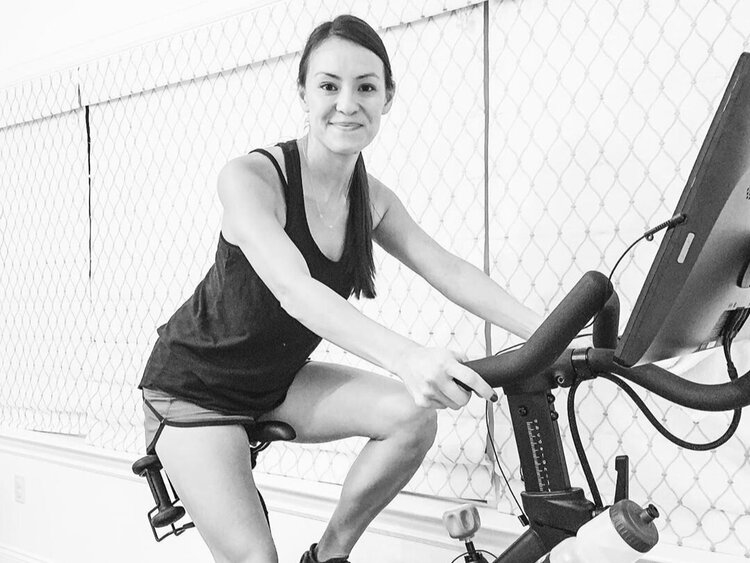
Keep in mind that opting for indoor cycling (like spin class or the Peloton at home) is one of the easiest ways to stay safe in all trimesters. This will help you reduce your risk of falls, and can give you the most control on your set up and riding conditions.

Cycling after pregnancy

woman holding baby smiling

Once cleared by your healthcare provider — typically around 6 weeks postpartum — you can return to cycling gradually. 

Start with gentle rides at low resistance and focus on posture, breathing, and pelvic stability. If you feel pain, pressure, or leaking, pause and seek guidance from a pelvic floor physical therapist.

Cycling can be a great way to rebuild endurance, but postpartum recovery requires patience and support. The V-Hive Postpartum Program can help you rebuild your core and pelvic floor strength safely as you return to activity.

Safe and comfortable cycling during pregnancy

So, can I ride a bike while pregnant? Yes! As long as it feels comfortable and your provider says it’s safe. Adjust your bike fit for your growing belly, prioritize saddle comfort, and use a stationary bike when balance becomes challenging.

Listen to your body: if you feel saddle pain, pressure, or shortness of breath, slow down or rest. Cycling during pregnancy should make you feel strong, not strained. With thoughtful adjustments and awareness, you can safely enjoy riding throughout your pregnancy, and beyond.

And for even more support and guidance, join The V-Hive for expert guidance on staying strong, comfortable, and pain-free through every stage of pregnancy.

References

  1. Chiaramonte, R., P. Pavone, G. Musumeci, M. D. Rosa, and M. Vecchio. “Preventive Strategies, Exercises and Rehabilitation of Hand Neuropathy in Cyclists: A Systematic Review.” Journal of Hand Therapy, vol. 35, no. 2, Apr.–June 2022, pp. 164–73. Elsevier, doi:10.1016/j.jht.2021.11.003.
  2. Carpes, Felipe P., Fábio Dagnese, João F. Kleinpaul, Ede A. Martins, and Carla B. Mota. “Bicycle Saddle Pressure: Effects of Trunk Position and Saddle Design on Healthy Subjects.” Urologia Internationalis, vol. 82, no. 1, 2009, pp. 8–11. Karger Publishers, doi:10.1159/000176017.
  3. Priego-Quesada, José I., et al. “Bicycle Set-Up Dimensions and Cycling Kinematics: A Consensus Statement Using Delphi Methodology.” Sports Medicine, vol. 54, no. 11, Nov. 2024, pp. 2701–15. Springer Nature, doi:10.1007/s40279-024-02100-6.
  4. Mudd, Lanay M., Kari M. Owe, Michelle F. Mottola, and James M. Pivarnik. “Health Benefits of Physical Activity during Pregnancy: An International Perspective.” Medicine & Science in Sports & Exercise, vol. 45, no. 2, Feb. 2013, pp. 268–77. Lippincott Williams & Wilkins, doi:10.1249/MSS.0b013e31826cebcb.
  5. “Exercise during Pregnancy.” American College of Obstetricians and Gynecologists, www.acog.org/womens-health/faqs/exercise-during-pregnancy. Accessed 31 Oct. 2025.
  6. Barakat, Ruben, Maria Pelaez, Carmen Lopez, Alejandro Lucia, and Jonatan R. Ruiz. “Exercise during Pregnancy and Gestational Diabetes-Related Adverse Effects: A Randomised Controlled Trial.” British Journal of Sports Medicine, vol. 47, no. 10, July 2013, pp. 630–36. BMJ Publishing Group, doi:10.1136/bjsports-2012-091788.
  7. Kasawara, Katia T., Suellen L. do Nascimento, Mario L. Costa, Fernanda G. Surita, and José L. e Silva. “Exercise and Physical Activity in the Prevention of Pre-Eclampsia: Systematic Review.” Acta Obstetricia et Gynecologica Scandinavica, vol. 91, no. 10, Oct. 2012, pp. 1147–57. Wiley, doi:10.1111/j.1600-0412.2012.01483.x.
  8. Davenport, Margie H., et al. “Prenatal Exercise for the Prevention of Gestational Diabetes Mellitus and Hypertensive Disorders of Pregnancy: A Systematic Review and Meta-Analysis.” British Journal of Sports Medicine, vol. 52, no. 21, Nov. 2018, pp. 1367–75. BMJ Publishing Group, doi:10.1136/bjsports-2018-099355.
  9. Stafne, Signe N., Kjell Å. Salvesen, Per R. Romundstad, Britt Stuge, and Siri Mørkved. “Does Regular Exercise during Pregnancy Influence Lumbopelvic Pain? A Randomized Controlled Trial.” Acta Obstetricia et Gynecologica Scandinavica, vol. 91, no. 5, May 2012, pp. 552–59. Wiley, doi:10.1111/j.1600-0412.2012.01382.x.
  10. “Exercise during Pregnancy.” American College of Obstetricians and Gynecologists, www.acog.org/womens-health/faqs/exercise-during-pregnancy. Accessed 31 Oct. 2025.

The V-Hive App

Your Pocket Pelvic Floor Therapist. Download the V-Hive Mobile App to access your pelvic floor and core workouts anytime, anywhere.

Start Your Free App Trial

You might also like…

What You Need to Know About Vaginal Steaming

What You Need to Know About Vaginal Steaming

Vaginal steaming — also known as yoni steaming or V-steaming — has resurfaced as a trendy self-care ritual, appearing everywhere from wellness spas to celebrity headlines (remember when Gwyneth Paltrow made headlines for vaginal steaming back in 2015?).1 The idea...

read more
What Causes Miscarriage? How to Heal Your Body and Heart

What Causes Miscarriage? How to Heal Your Body and Heart

Going through a miscarriage is one of the hardest things you may ever experience. The loss of a pregnancy affects not only your heart but also your body, leaving you with so many overwhelming  “what now?” moments.  While every person’s experience is different,...

read more
Anal Fissure vs. Hemorrhoid: What’s Going On Back There?

Anal Fissure vs. Hemorrhoid: What’s Going On Back There?

Let’s be honest — most of the time you’d rather not think about your butthole. But when it suddenly stings, itches, aches, or bleeds after a bowel movement, it can be hard to ignore. The real worry often comes from not knowing what’s causing it. Is it a painful but...

read more

Join the V-Hive waitlist!

Enter your name and email below and you'll be the first to know when our new app launches.

You have Successfully Subscribed!

How to Take Great Care of Your Pelvic Floor

Enter your name and email below and we'll send it right over.

Thank you! Check your inbox!

5 Myths We’ve Been Told About Pregnant Bodies

Enter your name and email below and we'll send it right over.

Thank you! Check your Inbox!

4 Signs of Pelvic Floor Muscle Tension

Enter your name and email below and we'll send it right over.

You have Successfully Subscribed!

How to Prepare Your Pelvic Floor & Core for Childbirth

Enter your name and email below and we'll send it right over.

Thank you! Check your Inbox!

6 Exercises To Strengthen Your Pelvic Floor and Core

Enter your name and email below and we'll send it right over.

Thank you! Check your inbox!

6 Exercises To Strengthen Your Pelvic Floor and Core

Enter your name and email below and we'll send it right over.

Thank you! Check your inbox!

5 Pelvic Floor and Core Exercises for C-section Recovery

Enter your name and email below and we'll send it right over.

Thank you! Check your inbox!

Take this one-minute quiz to get your personalized Pelvic Floor Roadmap to help with your most pressing pelvic floor problems.

Take The Quiz