Have you ever heard of using postpartum belly binding during your immediate postpartum recovery?
Over the course of your pregnancy, your body changes shape and makes room for your growing little one. Then, in postpartum, your muscles and organs literally shift around to get back into their proper places.
But do postpartum belly wraps really work? And do they work the same for everyone?
Let’s unpack the potential benefits of belly binding.
Belly Binding Only After a C-Section?
Postpartum belly binding—also called belly bands or binders—are usually recommended after major abdominal surgery like a C-section. But they can also be used to recover from a vaginal birth if you experience low back pain, a hernia, diastasis recti, core weakness or after the birth of multiples. These supports should be compressive, not overly tight or “binding” which increase pressure on an already vulnerable or weak pelvic floor.
In general, abdominal supports can be a great way to:
- Relieve pain
- Increase blood flow
- Protect your incision
- Lower swelling
- Improve posture
Does Postpartum Belly Binding Really Work?
During your pregnancy, your abdominal muscles lengthen and stretch to accommodate your new bundle(s) of joy. After pregnancy, they likely need some help to get their strength and function back.
Enter the binder.
Belly supports and bands are like compression socks for your abdominal and pelvic floor. They should give just the right amount of physical support to wrap the belly and decrease swelling while things naturally move back into place.
But not all belly bands are created equal.
During postpartum, you need something comfortable and flexible. These can include:
- Elastic wraps, made of soft and stretchy fabric that allow you to breathe easily while you move and shift. The wrap should be long enough to cover your hips and abdomen.
- Support belts, which are a little more resilient and can help you keep good posture while your muscles are still sore from your procedure. Having good posture and hip support can also help your body heal properly.
- Shapewear, like pregnancy and postpartum-specific compression garments. Just be careful these aren’t too tight and that you still have easy access for changing pads and postpartum underwear during those first few weeks.
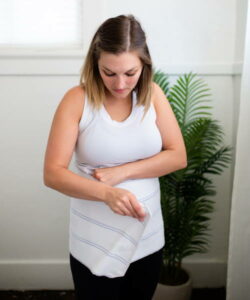
How Not to Wear a Postpartum Belly Binding
While abdominal binders can be a huge help after birth, they’re not a cure-all for the postpartum experience. Binders should not be used:
- Too tightly. The biggest risk to using a belly binder is putting too much pressure on your abdomen as it heals. You’ll want to have your postpartum pelvic therapist fit your binder to your body so that you’re not doing more harm than good.
- Wrapped downward. It’s important to wrap up, not down. Wrapping an elastic belly band the wrong way can put downward pressure on your pelvic floor and may cause additional weakness.
- All of the time. Give yourself breaks throughout the day. Wearing a wrap for too long won’t give your muscles the practice they need to heal and strengthen on their own.
- As waist trainers. Belly binding is all about protecting your pelvic floor and core after giving birth. Don’t use a waist trainer as a substitute for a proper belly wrap. Waist trainers are hard materials that don’t allow for natural movement and shifting while wearing them.
Best Belly Binders
If you’re looking for great support, I recommend this belly support band from BaoBei. It provides pelvic and abdominal support to manage all the swelling and discomfort in those early postpartum days. However, if you are reading this while still pregnant, the BaoBei bloomers are also amazing during pregnancy It’s a win-win!
A few of my other favorite supports include this soft binder by Braceability or FridaMom.
In lieu of traditional belly bands postpartum, I love these SRC recovery shorts.
Your pelvic floor and core deserve all the support postpartum, and the V-Hive membership program will give it to you! Start your 7-day free trial today.
Some links may be affiliate links. The products we recommend are products we use or recommend to clients.