What is mommy wrist?
There are many familiar terms for postpartum symptoms. You likely have heard of “mummy tummy” and “sneeze pee.” But, have you also heard of “mommy wrist?” It’s a term for symptoms of De Quervain’s Tenosynovitis. It is a type of tendonitis and often occurs in caregivers of young children. This is pain and inflammation of the tendons that run along the backside of the thumb and across the wrist.
Symptoms
Do you have pain during, after picking up or holding baby, especially on your hand and wrist? This is because the position and movement of the wrist during the repeated lifting of the baby can cause strain to this area. You may also have pain on the thumb side of the wrist and at the base of the thumb. This could be due to improper lifting technique, where the wrists/hands are angled downwards as you lift, from the excessive motion of the wrists to help raise, or from high demand (an ‘overuse injury’). There are ways that this pain can be treated and hopefully prevented. Some tips and exercises are apparent, like wrist and hand stretches. Some of the exercises may come as a surprise, like back strengthening!
Your shoulder girdle might be to blame
Just as the pelvis is the “core” of the hips and legs, the shoulder girdle (including the shoulder blades) can be considered the “core” of the arms. When evaluating patients for symptoms from the shoulders to the hands, I often find a weak, tight, or unstable shoulder girdle. Therefore, it is crucial to treat “mommy wrist” holistically and prevent it from recurring once symptoms are under control.
In addition, it is vital to address shoulder girdle issues as a basis for arm movement. The movements translate to wrist stability during lifts and other daily tasks. Treatment options are available! Below are some tips and exercises to help treat “mommy wrist.” These do not constitute actual physical therapy services or medical advice. Please see your physician or physical therapist in person if you need individualized care.
How to prevent mommy wrist
To help prevent symptoms, use a lifting technique instead of gripping your baby under your arms or around the torso with your hands. Try scooping the baby up with your hands at the baby’s bottom and back/head. It’s also important to consider your breastfeeding positions when you pick up, hold and nurse. Position baby in a way that your hands and arms are supported and not working to hold baby’s head or body for long periods. Work on avoiding repetitive thumb movements as well.
How to treat it
- Manage inflammation RICE (rest, ice, compression, elevation)
- Rest from lifting and holding the baby. I know this is an impossible request for most. But, look for ways to minimize it, like wearing the baby in a carrier or having assistance from family members.
- I recommend icing every few hours for 10-15 minutes at a time for one whole week, even if symptoms disappear. You can use an ACE bandage or hair tie to strap an ice pack (or pack of peas, an ice cube in a washcloth, etc.) to the painful area while breastfeeding or napping.
- Get generic, simple compression sleeves or splints to reduce pain. Wearing a splint may be needed. Get them at the drugstore or supermarket. They can be worn for support during peak hours of handling the baby. Or, consider other times, such as on the job, if work-related tasks exacerbate symptoms.
- Check with your physician about using over-the-counter anti-inflammatory medicines such as ibuprofen to reduce inflammation. Elevate when you can. Sometimes, a steroid injection with corticosteroids may be needed if other methods don’t work.
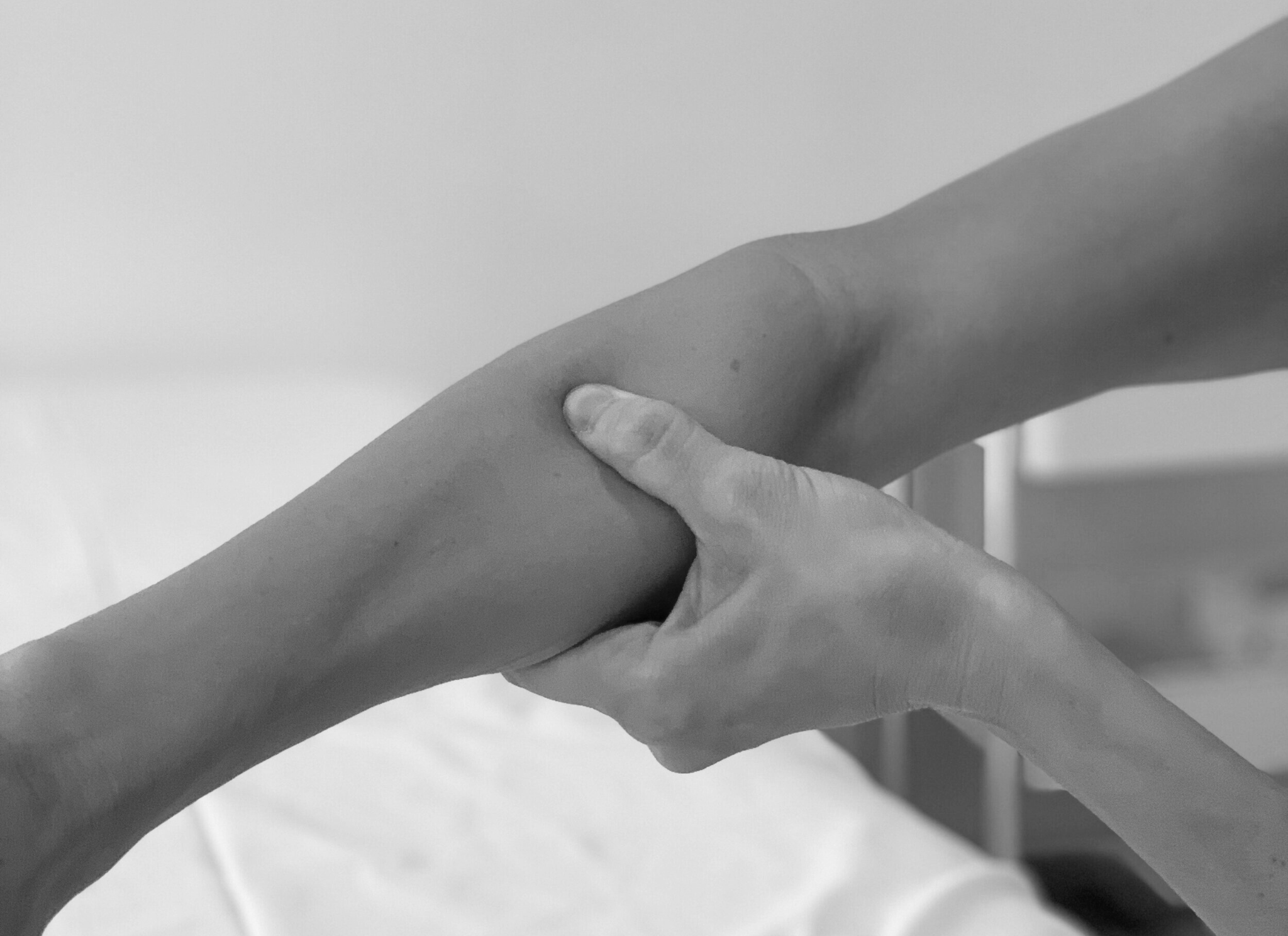
- It may help to massage the muscles along the front and back sides of the forearm, between the wrist and elbow. Reducing muscular tension can assist with reducing inflammation and tension in the tendons.

Exercises to help with mommy wrist
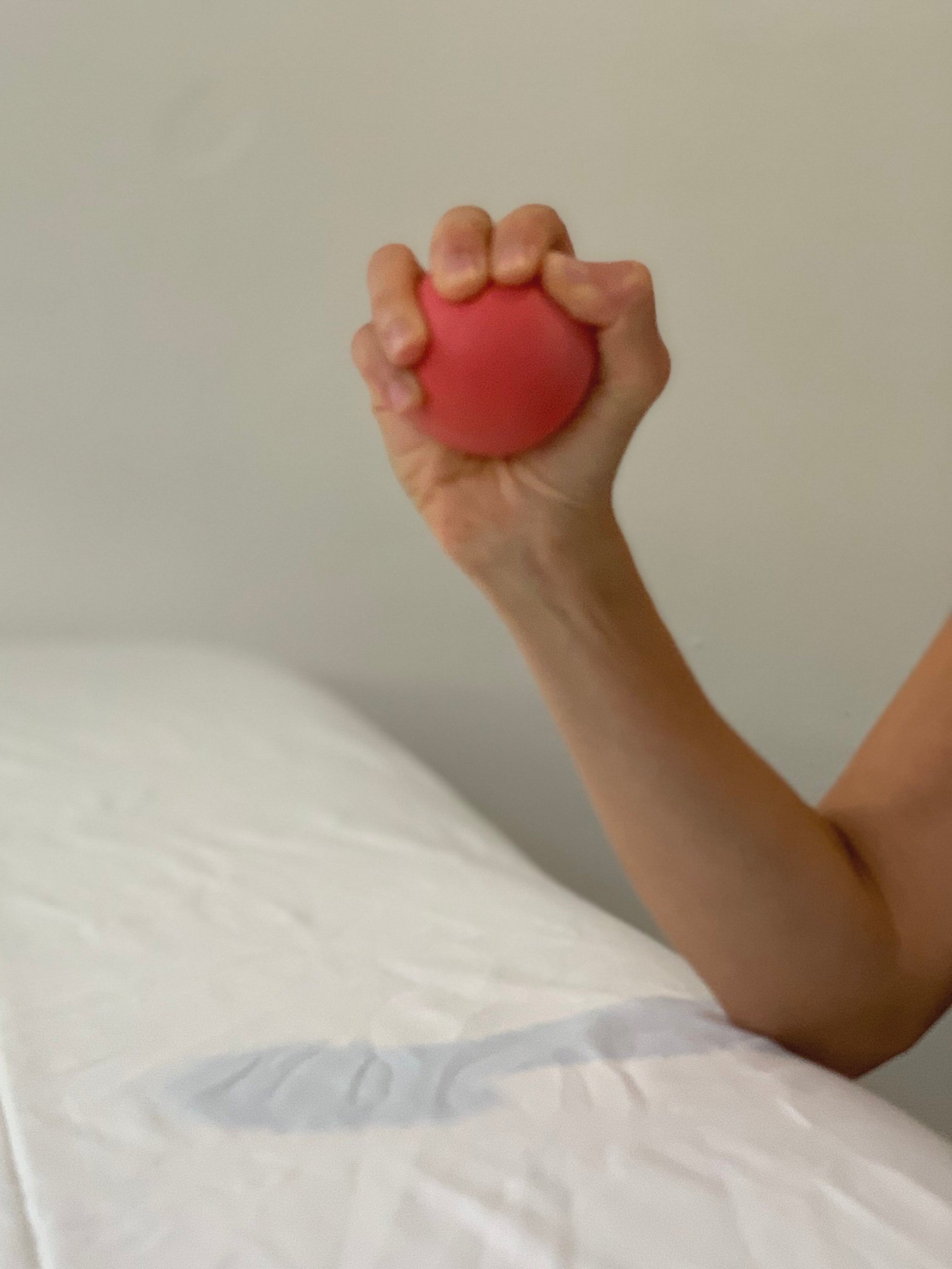
The following activities below include exercises and stretches to target the direct area of symptoms, as well as the surrounding hand, forearm, and mid-back as the “core” of the entire upper limb. For the first two exercises, be sure to pinch your shoulder blades together as you pull the theraband.
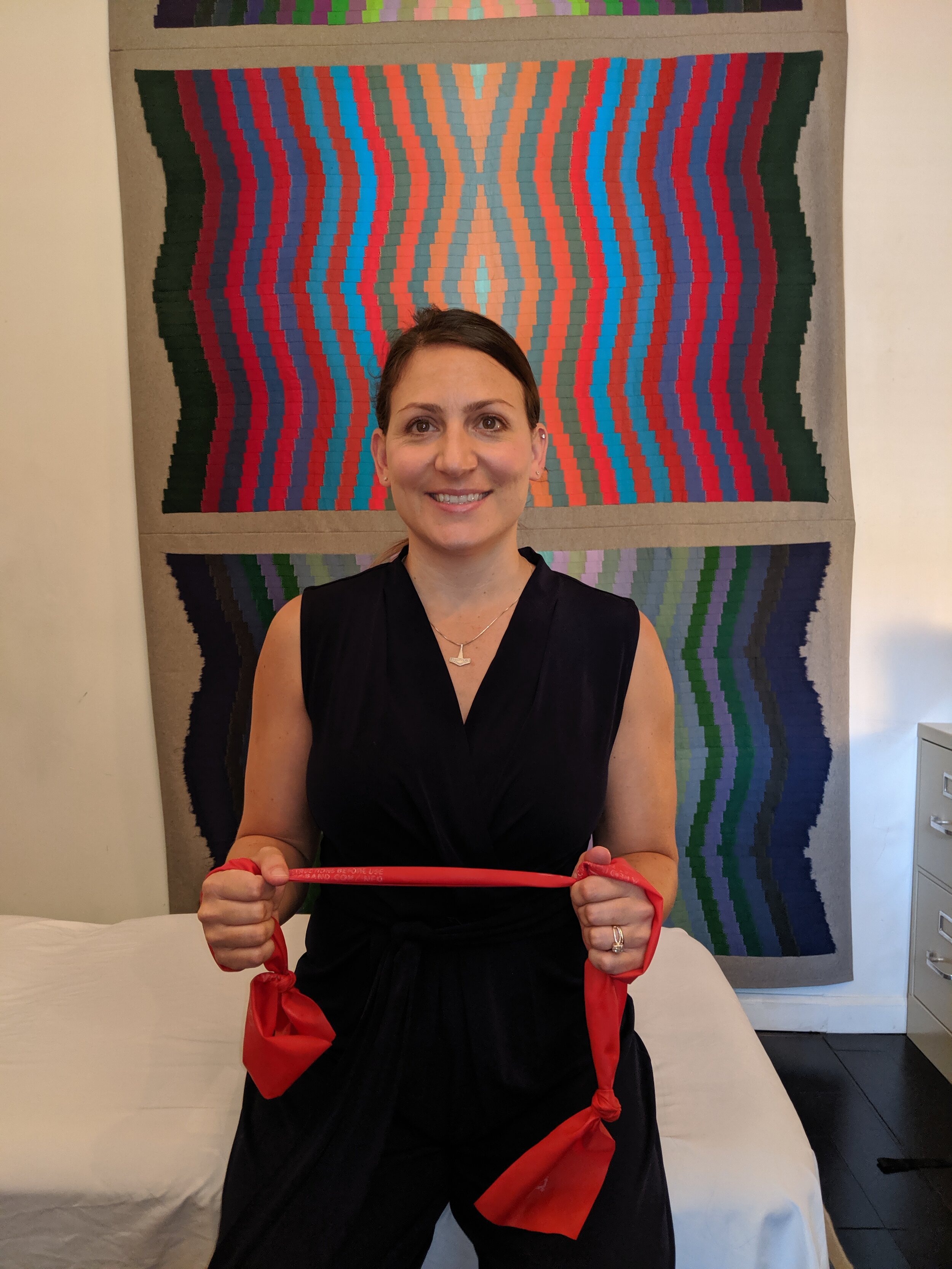
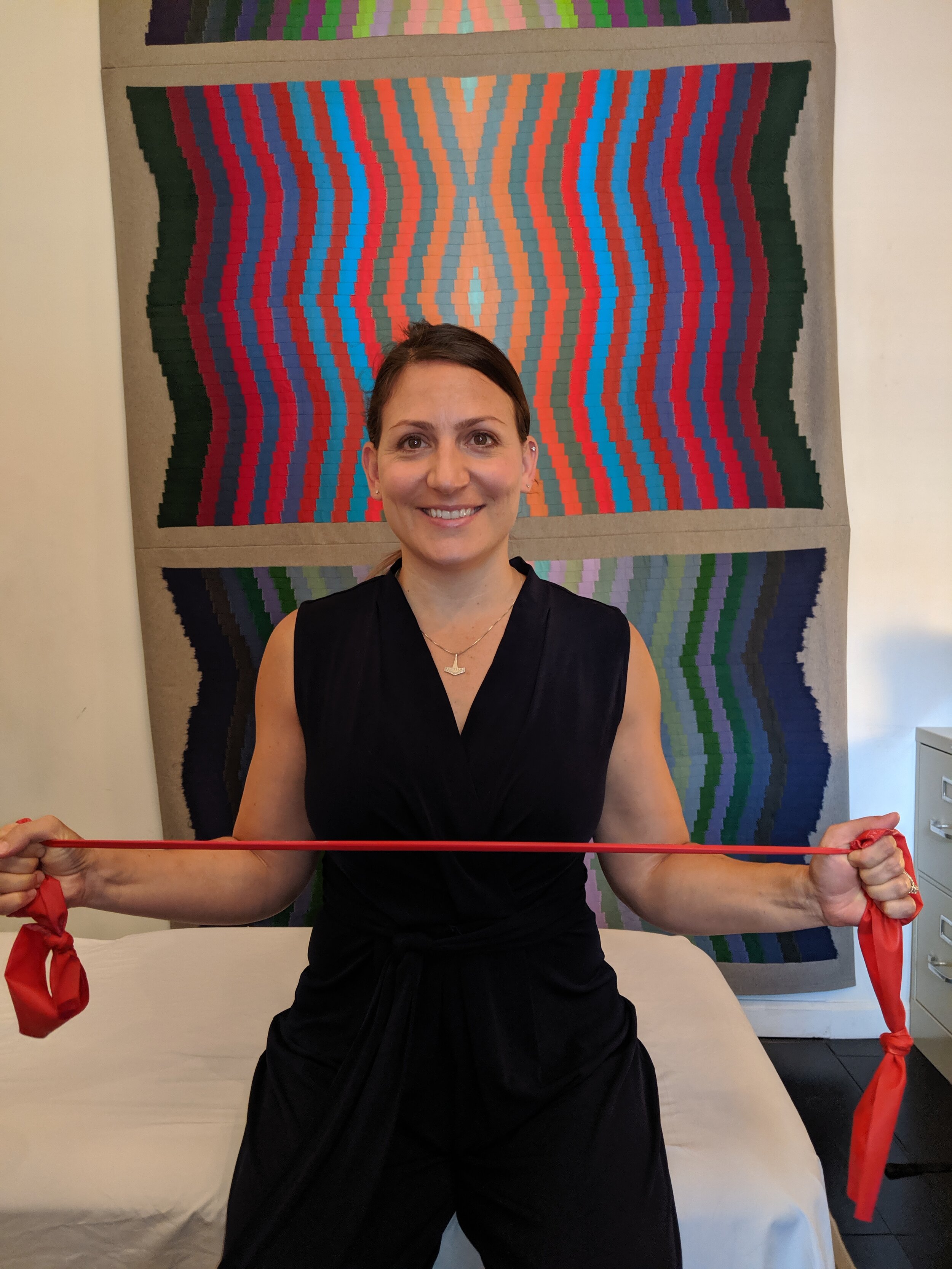
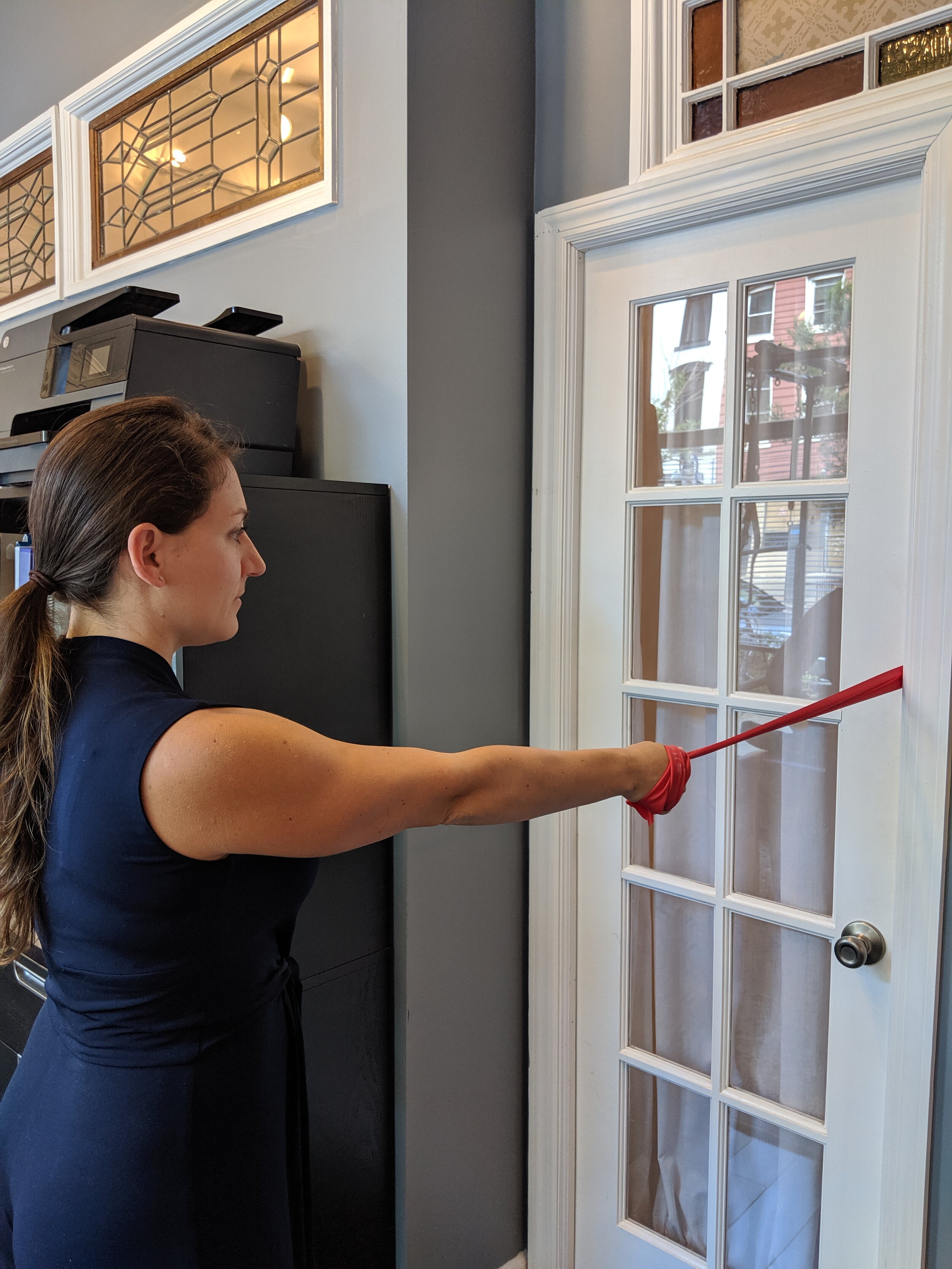
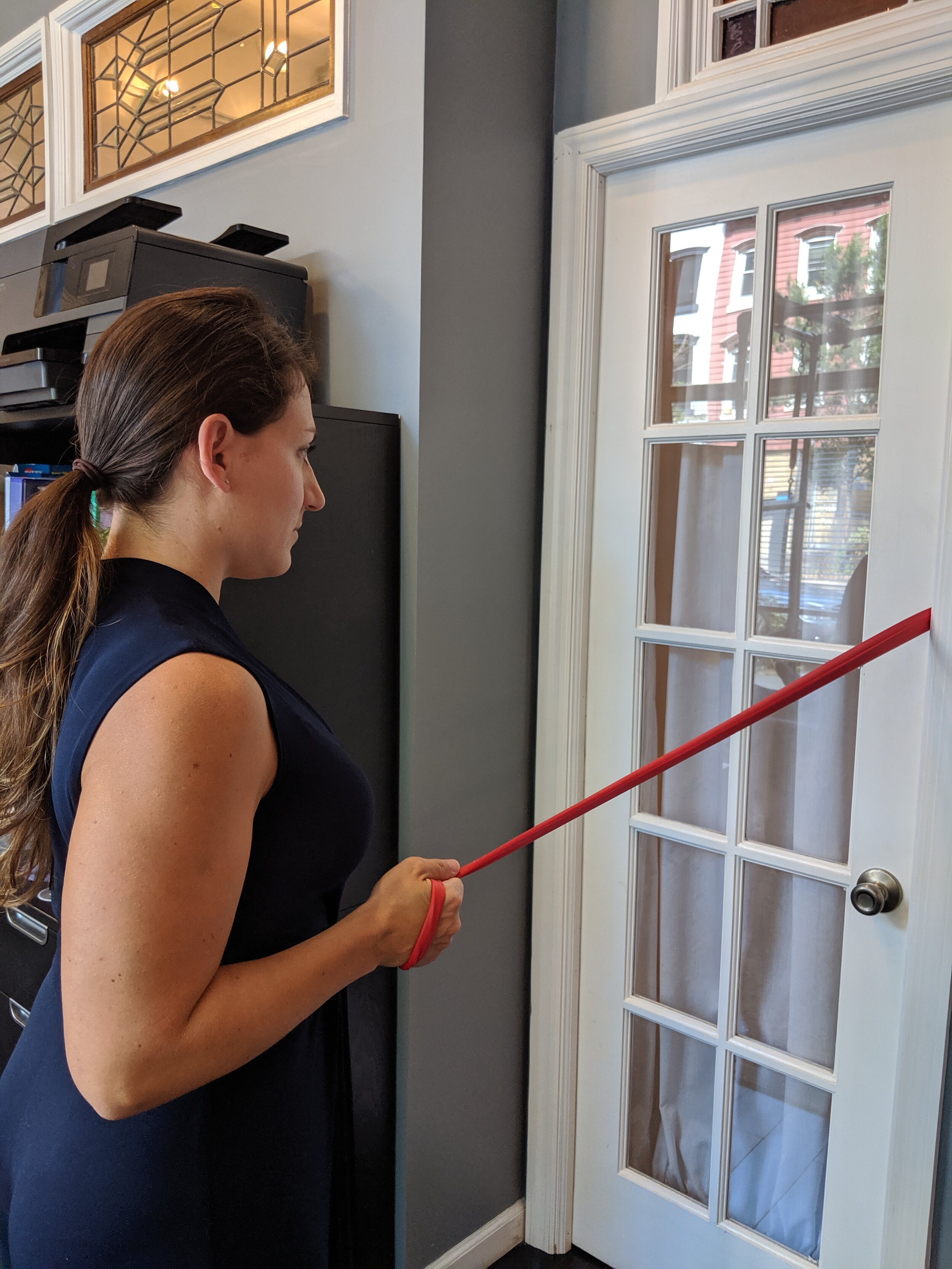
Below are some stretches you can do daily to stretch and strengthen your wrist muscles.
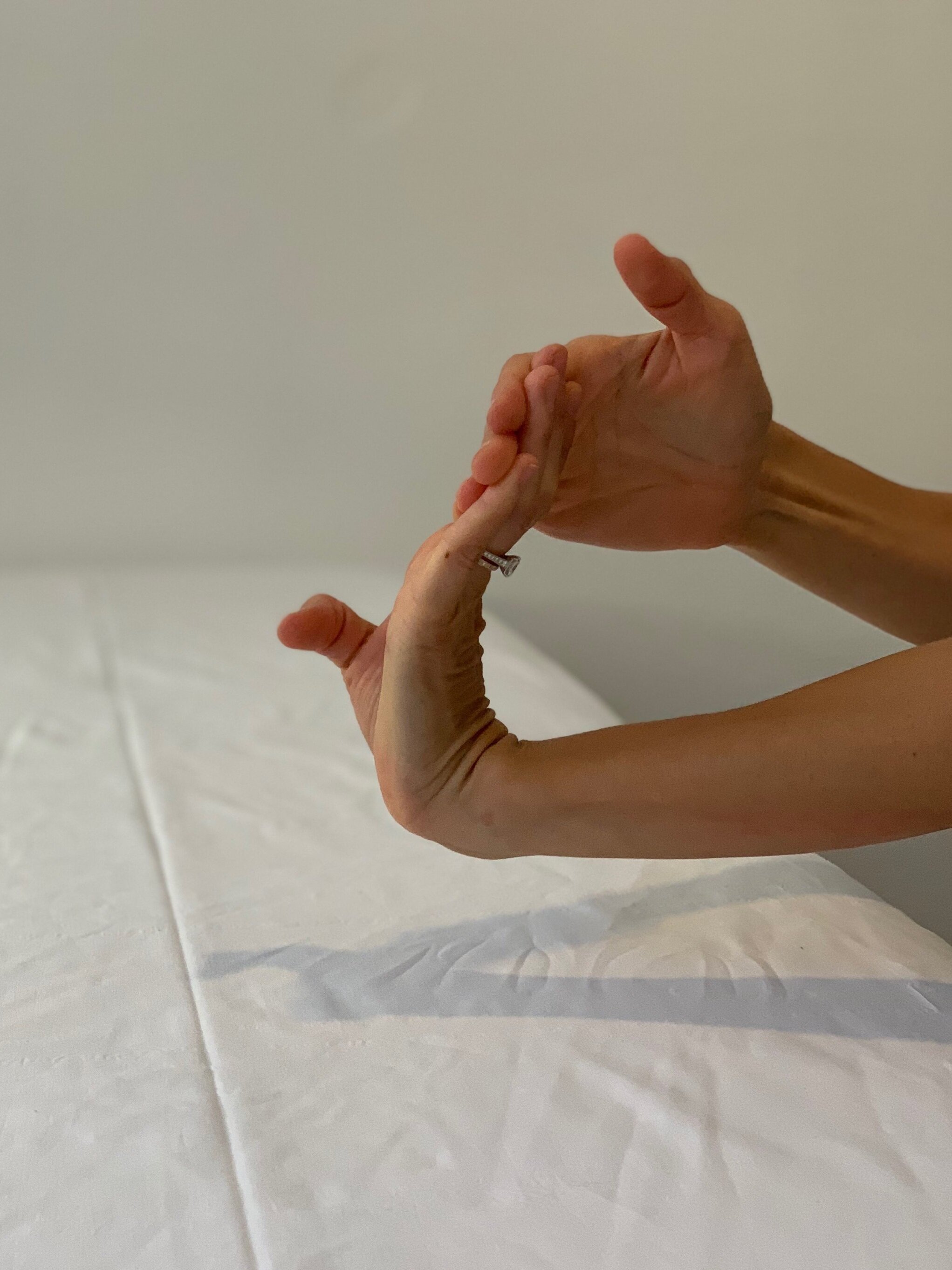
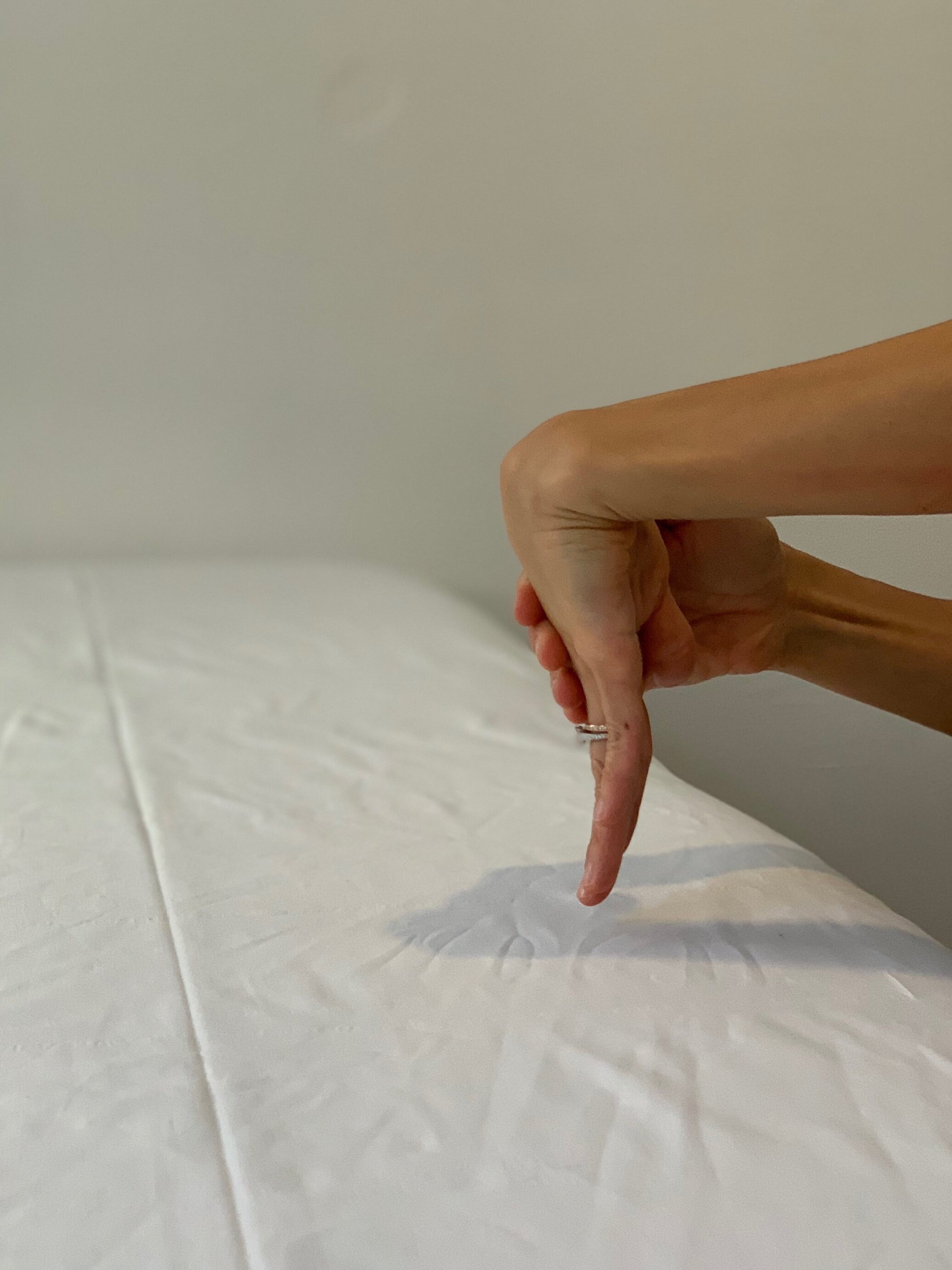
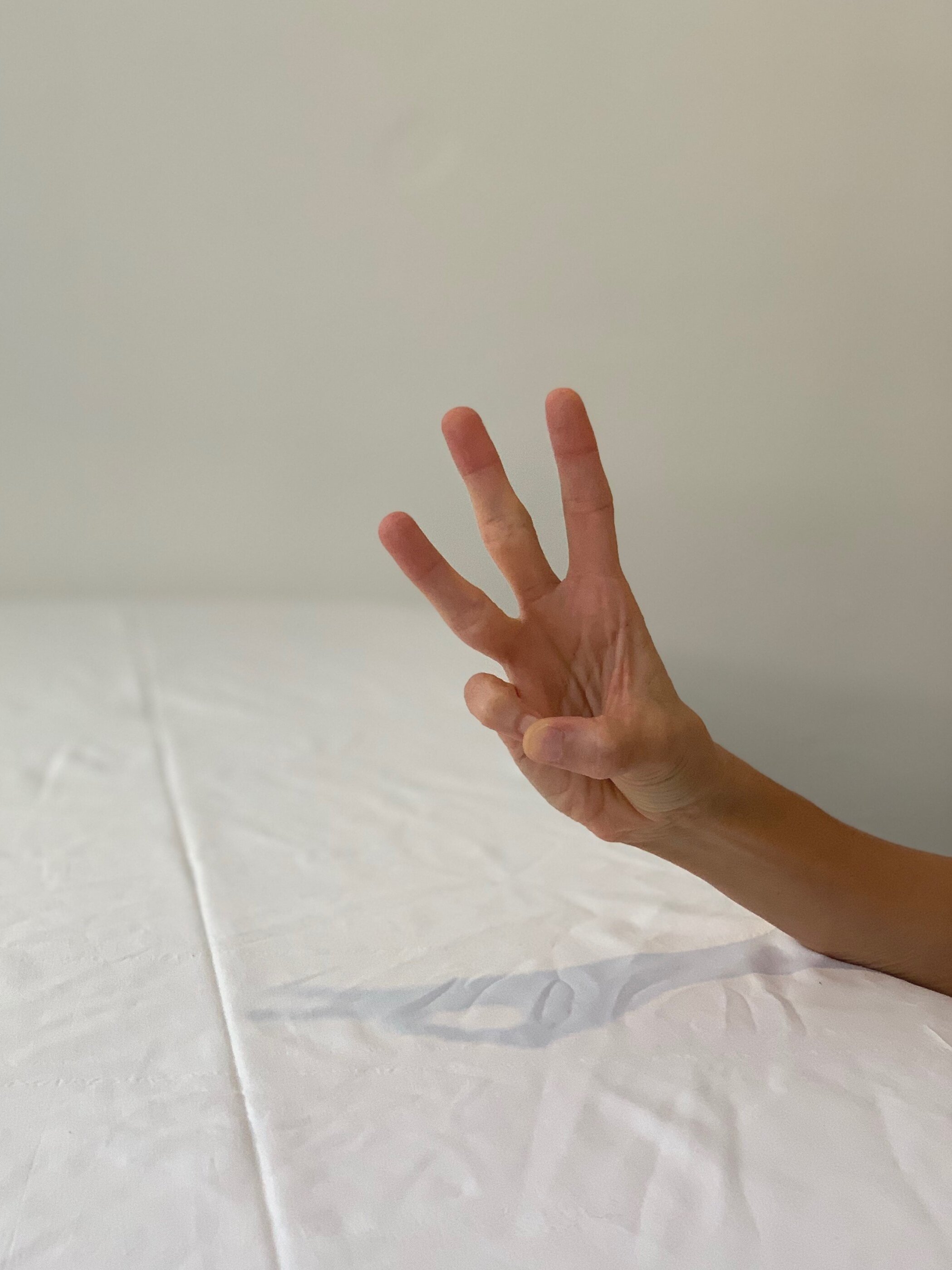
Some links may be affiliate links. The products we recommend are products we use or recommend to clients.